When a farm animal is family: cremation and aftercare, explained
Goats, sheep, pigs and alpacas are pets to you but livestock in law, and cremated remains come to about 3-5% of body weight[1], so even a pygmy goat comes home in a real urn. We'll help you find cremation with ashes returned, or the right alternative, near you.
- Options for goats, sheep, pigs, camelids, donkeys and poultry
- Straight answers on burial rules and collection
- Written prices before anyone loads the trailer
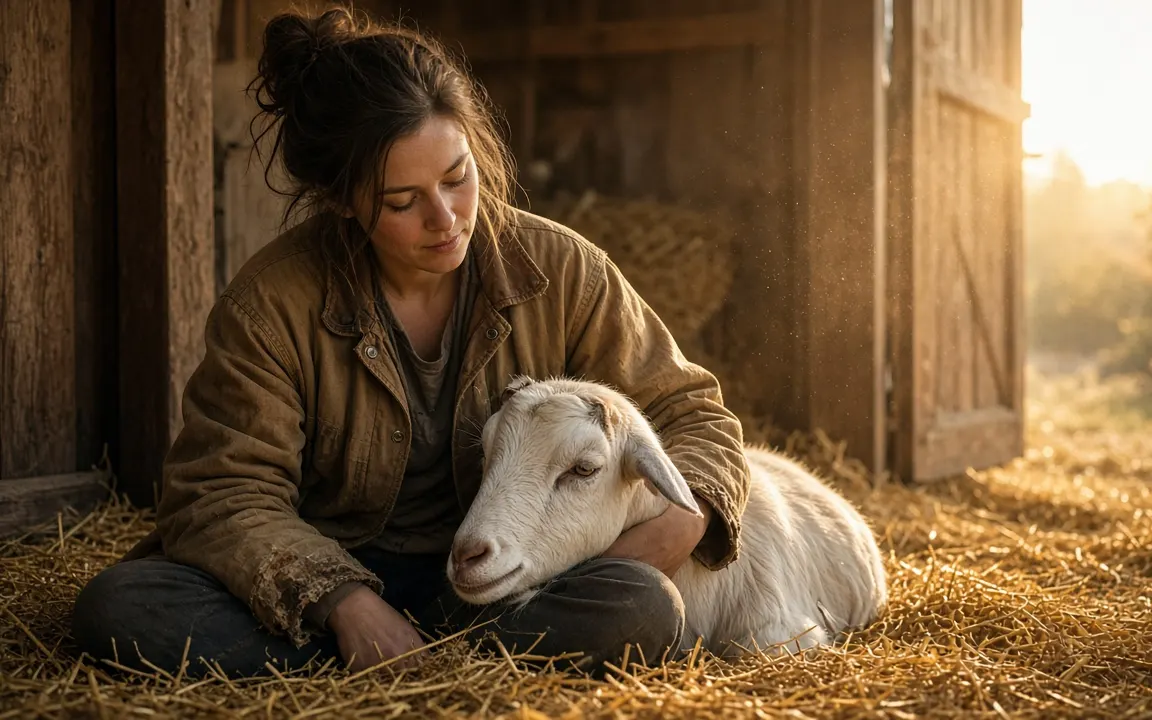
If your animal has just died
The first 24 hours with a goat, sheep, pig or alpaca
Farm species don't give you as much time as a dog or cat. A 150 lb goat or a pot-bellied pig holds heat, and the rumen of a goat, sheep or alpaca keeps fermenting after death, so the body can bloat within hours on a warm day. Our step-by-step article on what to do when a pet goat dies covers those first hours. Many US states expect a dead farm animal to be dealt with within 24-72 hours[2], and some counties are stricter.
- Move the body into shade, or into a cool barn or shed, and lay it on its side on straw or a tarp. If you can, raise the head slightly.
- Cover it with a sheet or tarp to keep off flies, birds and dogs. Don't wrap it tightly in plastic, which traps heat.
- Keep the rest of the herd or flock calm. Goats, alpacas and donkeys often do better if a bonded companion is allowed to see and sniff the body for a few minutes.
- Call your vet if the death was sudden or unexplained. Some diseases in pigs, poultry and ruminants must be reported, and your vet will know which.
- Decide on ashes before you call anyone else. Whether you want your animal's own ashes back decides which provider can help.
If moving your animal is the hard part, our page on transport and logistics when a farm animal passes covers tarps, sled drags, trailer ramps and how much help to ask for.
The part that surprises people
Why the law treats your pet goat like a herd animal
Rules about dead animals were written for farms, disease control and water safety, not for a kunekune pig that sleeps by the woodstove. So a species usually counts as livestock whatever its role in your life. That's why the options open to a dog owner, like burying under the apple tree, may be closed to you.
ban on livestock burial[4]
England has 5 approved routes[5] for fallen stock: knackers, hunt kennels, maggot farms, incinerators and renderers. Most smallholders use the National Fallen Stock Company scheme. Pet cremation through a licensed incinerator is one of those routes, which is why it's often the only way to keep your animal's ashes. The government's fallen stock guidance for England lists each approved route and how collection works.
In the US there's no single rule. Pennsylvania wants a dead domestic animal disposed of within 48 hours[6], Michigan sets depth and well distances, and California bans composting whole sheep and goats. Our local pages summarize what applies where you live. Penn State Extension's summary of livestock mortality rules is a clear example of what one state expects.
Before today, did you know the burial rules for farm species where you live?
Tap an answer to vote and see how others answered. Anonymous.
What you can choose
Your realistic options, from cremation to collection
Once you know what's legal, the choice usually comes down to four routes. Only one of them brings anything home.
- Private cremation with ashes returned. Your animal is cremated alone and the ashes come back in an urn or scatter tube. This is what most people with a named goat, pig or alpaca want, and it's the most expensive route.
- Communal cremation. Several animals are cremated together and no ashes are returned. It costs much less, and many pet crematories that take small farm species offer it.
- Fallen-stock collection or rendering. A collector takes the body from the farm gate. It's quick and cheap, but it's an industrial process and nothing is returned. For some owners that's fine; for others it feels wrong for a pet.
- Burial or composting on your own land, only where your state or country allows it for that species. Deep, well away from water and, for a euthanized animal, often not advisable at all.
Our services page walks through each option with typical costs and who it suits. If you're weighing cremation against burial or composting on cost alone, the aftercare options comparison ranks them by what matters to you.
Would you want your animal's own ashes returned?
Tap an answer to vote and see how others answered. Anonymous.
Prices
What farm animal cremation costs, by weight
Weight sets the price, and farm species cover a huge range. A bantam hen weighs a couple of pounds; a mature pot-bellied pig can top 150 lb; a llama can reach 400 lb. Few providers publish farm-species prices, so the table uses the closest published figures as reference points.
| Animal | Typical adult weight | Closest price reference |
|---|---|---|
| Hen, duck or bantam | 2 to 10 lb | Small-pet band: communal about $30 to $75, private about $100 to $175 |
| Pygmy or Nigerian Dwarf goat | 50 to 80 lb | Large-dog band: private about $200 to $300 |
| Sheep, dairy goat or alpaca | 100 to 200 lb | Above the giant-dog band (private $350 to $450), usually quoted individually |
| Pot-bellied or kunekune pig | 100 to 250 lb | Quoted individually; needs a large chamber |
| Llama, donkey or farm pig | 250 to 600+ lb | Large-animal crematory; a 1,000 lb horse runs about $600 to $1,000 |
Put another way, by our estimate horse cremation works out to roughly $0.80/lb[7] at midpoint prices, and that's a sensible yardstick for anything over about 200 lb. Farm collection, mileage and after-hours callouts are usually on top.

Free tool
Cremation cost calculator
Estimate a realistic price range for your pet's size, location and the type of cremation.
For a line-by-line look at what goes into a quote, from winch fees to urn upgrades, read our guide to hobby-farm companion cost factors.
What comes home
How much ash to expect, and what to do with it
Cremated remains come to about 3-5% of body weight[1]. A 70 lb pygmy goat returns two to three and a half pounds; a 160 lb alpaca returns five to eight. A hen returns only a few tablespoons, so ask for a small container rather than a standard urn.
Many smallholders scatter ashes where the animal grazed, under a favorite tree or along a fence line they leaned on. Scattering isn't the same as burial, so it's generally allowed on your own land. Some keep a little back in a keepsake urn. The urn size calculator turns weight into urn volume.

Take keepsakes before collection: a lock of fleece or wool, a few feathers, the halter or collar, an ear tag if there is one. For ideas that fit a working landscape, see creating a farm memorial corner.
Before you agree to anything
Five questions for any provider who takes farm species
Many pet crematories take only dogs and cats. Others take goats but not pigs, or cap weight at 150 lb. Few people shop around: in the UK, 89%[8] of pet cremation buyers never compared providers. With farm species, comparing matters more, because the gap between quotes can be wide.
- Do you accept this species at this weight, and is the cremation truly private?
- Can you collect from the farm, and what equipment do you bring: a winch, a sled, a ramp?
- What's the total, including mileage, callout and the urn?
- How is my animal identified from the farm gate to the return of the ashes?
- Can I keep fleece, feathers or the halter, and will you return the ear tag?
Our longer list of questions to ask a farm animal cremation provider includes what good answers sound like. Or send us the details and we'll find who covers your area.
It's allowed to hurt
Grieving an animal other people call livestock
A goat that followed you round the garden or a hen that sat on your knee can leave a gap as big as any dog. Surprise at the intensity is common: 66.9%[9] of bereaved owners in a large RSPCA survey said their grief was stronger than they expected. Smallholders often hear an extra layer of dismissal, the sense that farm animals come and go.
Feeding round feels different when one bucket is no longer needed.
The rest of the herd may call or pace for days, and that can reopen things. Keep routines steady and give the companion animal extra time. Our page on grief after losing a farm animal has practical ideas for you and for the animals left behind. If you want to see what other keepers found hardest on the day, the live tallies are on our poll results page.

Reader polls
What would you choose?
Vote anonymously and see how other readers answered. The results are live counts from people who visit this site, so they show real opinions, not a scientific sample.
Which of your animals are you thinking about today?
Tap an answer to vote and see how others answered. Anonymous.
How do you think of the animal you've lost, or are about to lose?
Tap an answer to vote and see how others answered. Anonymous.
If you had to decide today, which aftercare would you choose for your pet?
Tap an answer to vote and see how others answered. Anonymous.

Free tools to help you plan
Cremation cost calculator
Estimate a realistic price range for your pet's size, location and the type of cremation.
Livestock mortality planner
Plan disposal capacity and costs for farm losses, from one animal to a herd.

Urn size calculator
Find the urn volume you need from your pet's weight, plus keepsake and sharing options.
Questions people ask
Can I bury my pet goat, sheep or pig on my own land?
It depends on where you live. In England, pigs, sheep and goats count as farmed animals even when they're pets, so on-farm burial generally isn't allowed and you'll need cremation or a fallen-stock collector. In the US, most states permit burial with depth and setback rules, but a euthanized animal should be buried deep or cremated so wildlife can't reach it.
How much does it cost to cremate a goat?
A small goat of 50 to 80 lb often falls in the same range as a large dog, roughly $200 to $300 for private cremation in the US. Full-size dairy or meat goats weigh more and are usually quoted individually. Farm collection and mileage are extra, so ask for a written total before you agree.
Will a normal pet crematorium take a pig or an alpaca?
Some will, many won't. Pet crematories are built around dogs and cats, and some cap weight at around 150 lb or refuse pigs altogether. Larger animals may need an equine or large-animal crematory. Always give the species and a weight estimate on the first call.
Do I have to report the death of a backyard chicken or pig?
Not usually for a single death with an obvious cause. But unexplained deaths, especially several birds at once, should be reported to your vet or animal health authority because of diseases like avian influenza. Pigs and ruminants also have notifiable diseases. If in doubt, ask your vet before arranging cremation.
Can I get my own animal's ashes back through fallen-stock collection?
No. Fallen-stock collectors, knackers and renderers process animals in bulk and nothing is returned. If you want your animal's own ashes, you need a private cremation, and you should confirm in writing that it is private rather than communal.
How long can I keep a dead goat or sheep before collection?
Not long. Ruminants bloat quickly, especially in warm weather. Many US states expect disposal within 24 to 72 hours, and in the UK fallen stock that needs testing must be reported within 24 hours. Keep the body cool and shaded and book collection the same day if possible.
Keep reading

Farm animal aftercare options
Private and communal cremation, farm collection, burial and composting compared.

Rules and providers near you
Burial rules, collection and prices by state and country.

What a farm animal quote includes
Collection, weight, mileage and urns, line by line.
What other smallholders chose
Live results from our reader polls.
Sources and our estimates
- [1] Embrace notes cremated remains typically weigh about 3-5% of the pet's original body weight. Embrace Pet Insurance - Bury or Cremate Your Dog? Costs, Pros & Cons, 2025.
- [2] State rules commonly require dead animals to be buried within 24 to 72 hours of death, especially when euthanized. Cornell Waste Management Institute & Penn State - Horse Mortality: Carcass Disposal Alternatives (2012), 2012.
- [3] Since 2003 the FDA has required euthanasia drug labels to warn that euthanized animals must be disposed of by deep burial, incineration or another approved method to keep scavenging wildlife from eating the carcass. Cornell Waste Management Institute & Penn State - Horse Mortality: Carcass Disposal Alternatives (2012), 2003.
- [4] England bans the burial or open burning of fallen farm stock, but pet animals may be buried, and England (unlike Scotland and Wales) allows burial of both pet and non-pet horses. GOV.UK (Defra/APHA) - Fallen stock guidance, 2024.
- [5] England's approved routes for fallen stock are knackers, hunt kennels, maggot farms, incinerators and renderers; the not-for-profit National Fallen Stock Company runs collections for farmers and horse owners. GOV.UK (Defra/APHA) - Fallen stock guidance, 2024.
- [6] Pennsylvania requires a dead domestic animal to be properly disposed of within 48 hours of death. Penn State Extension - Livestock and Poultry Mortality Disposal in Pennsylvania (J. Craig Williams, updated Oct 2025), 2025.
- [7] Midpoint horse cremation cost works out to about $0.80 per pound of body weight, versus about $0.14 per pound for rendering pickup and $0.23 per pound for on-farm composting. Our estimate: cremation $800 / 1,000 lb; rendering $137.50 / 1,000 lb; composting $275 / 1,200 lb. How we calculate.
- [8] 89% of UK owners who bought a pet cremation did not compare different providers; 9% did. UK Competition and Markets Authority - Veterinary services for household pets, Provisional decision report Part A (Oct 2025), 2025.
- [9] 66.9% of respondents were surprised by how intense their grief was after losing a pet. RSPCA — Pet Loss Survey Results, 2026.
Find cremation for your goat, sheep, pig or alpaca
Tell us what you need and where you are. We'll reply by email with clear options and prices so you can decide in your own time.